Contingent Workforce Planning: Forecasting Flexible Headcount for the Year Ahead
Contingent workforce planning helps organizations estimate how much external talent they may need, when they will need it, and where…
Select location
The organization had already implemented Zero Trust. MFA was enabled. Access policies were in place. The security posture looked strong on paper.
This is becoming a familiar pattern in 2026. Not because Zero Trust is flawed, but because many implementations leave critical enforcement gaps that attackers know how to exploit.
According to Compunnel’s Zero Trust identity security guide, 84% of organizations experienced an identity-related breach in 2025. In 75% of those cases, attackers gained access using stolen credentials rather than breaking through the perimeter.
Zero Trust was designed to stop exactly this kind of attack. So why are breaches still happening?
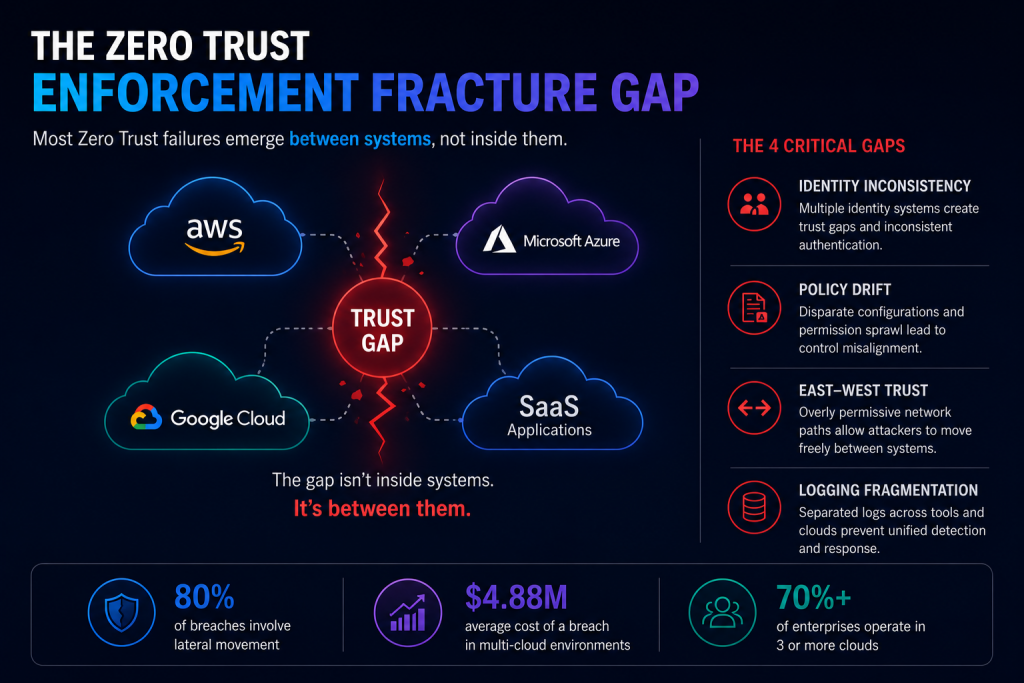
The root cause of most ZT failures is that organizations built their implementation around infrastructure perimeters rather than identity.
ZTNA tools are excellent at securing human access to specific applications. They were not designed to govern machine-to-machine traffic, which represents the majority of enterprise network activity in 2026. Cloud-native service meshes introduce implicit trust between services that most teams never audit. Cloud control plane APIs carry administrative-level permissions that are rarely included in ZT policy scope.
Zero Trust network architecture works. But it is only as effective as its identity coverage. A network segment that enforces Zero Trust for human users while allowing unrestricted machine identity traffic is not Zero Trust. It is a theater.
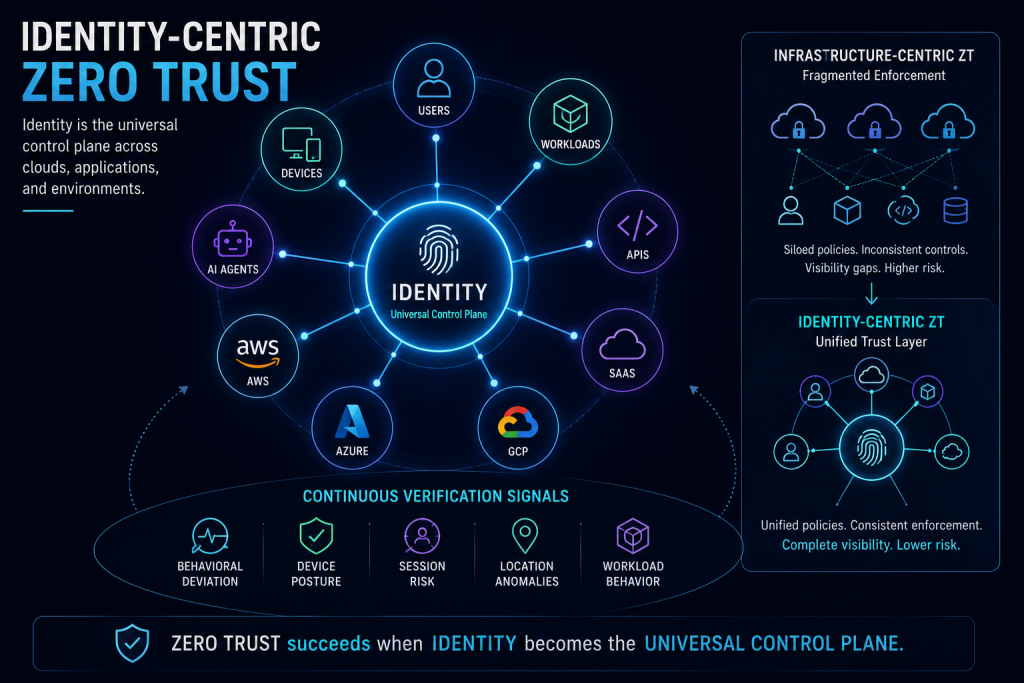
The organizations closing the ZT gap are those that have moved identity to the center of their implementation, treating it as the universal control plane across clouds rather than as one layer among many.
Effective Zero Trust in a multi-cloud environment is not a tool purchase. It is an architectural decision that starts with identity.
The organizations that make it work in 2026 are investing in Infrastructure Security Services that address policy consistency across cloud environments, alongside Identity and Access Management Services that extend identity governance to both human and non-human entities.
The principle behind all of this is simple. Zero Trust works. Identity-blind Zero Trust does not.
Is your Zero Trust strategy enforced consistently across every cloud? Request a Zero Trust gap analysis from our security architects.

List of Content

Contingent workforce planning helps organizations estimate how much external talent they may need, when they will need it, and where…

Managed payroll services move much of the day-to-day payroll administration to a third-party provider. The provider can handle payroll calculations,…