Contingent Workforce Planning: Forecasting Flexible Headcount for the Year Ahead
Contingent workforce planning helps organizations estimate how much external talent they may need, when they will need it, and where…
Select location
Companies that outperform their competitors are 4.2 times more likely to have a mature talent management strategy, yet most organizations treat it as little more than a hiring checklist.
The gap between those two approaches costs businesses billions in turnover, lost productivity, and missed growth opportunities every year.
Talent management is the ongoing organizational strategy of attracting, developing, motivating, and retaining skilled employees to meet business goals. It covers the full employee lifecycle, from workforce planning and recruitment through performance development, succession planning, and retention, aligning people strategy with company objectives.
Talent management is the ongoing, strategic process of attracting, developing, motivating, and retaining employees so an organization can meet its current and future business goals. It’s not a single HR task but a connected system that covers everything from the recruitment process and onboarding all the way through career development, succession planning, and performance reviews. Think of it as the full lifecycle of an employee’s relationship with a company, shaped intentionally rather than left to chance.
According to McKinsey, companies that practice effective talent management are 2.2 times more likely to outperform their peers on total shareholder returns. That figure alone explains why organizations invest heavily in oversight of workforce planning and talent development programs. A second key data point comes from CIPD, which notes that organizations with mature talent strategies report significantly stronger employee engagement and lower voluntary turnover, two outcomes that directly protect the bottom line.
Consider a mid-sized technology firm struggling to fill senior engineering roles. Rather than relying solely on external hiring, a talent management strategy would map internal skills gaps, identify high-potential employees, and design targeted workforce management plans to promote from within. That same approach shifts the company’s culture so leaders start seeing people development as core to their role, not a side responsibility.
In sectors like healthcare, where workforce shortages are acute and the stakes of poor performance are high, building a high-performing workforce through deliberate talent management isn’t optional. It’s a survival strategy. Whether you’re a startup or a global enterprise, a clear definition is the foundation every other talent initiative builds on.
Talent management is important for business success because it directly determines whether a company can build and sustain a high-performing workforce capable of meeting evolving market demands. Without a structured approach to attracting top talent, developing existing employees, and retaining employees who drive results, organizations stall, lose competitive ground, and struggle to fill critical roles. The stakes are real. McKinsey reports that companies excelling at talent management generate up to 3.5 times more revenue growth than peers who treat it as an afterthought. That gap exists because talent strategy touches every layer of a business, from daily execution to long-term planning.
Consider a mid-sized technology company facing serious skills gaps in its engineering department. Without a clear talent development roadmap, the team ships slow, misses deadlines, and loses clients. A competitor with deliberate workforce management practices, including internal upskilling programs and structured performance reviews, fills those gaps faster and scales without constant external hiring. The difference isn’t budget alone, it’s process and intention. Understanding why AI fails in business often points back to the same root cause: organizations invest in tools without investing in the people needed to use them effectively.
Take healthcare as a practical example. Hospitals that invest in ongoing talent development for nursing staff see measurably better patient outcomes and lower agency staffing costs. Explore how workforce strategies are reshaping the healthcare industry in ways that go far beyond simple headcount management. Proper oversight of workforce planning in high-stakes environments like this demonstrates that talent management isn’t a soft HR exercise, it’s an operational necessity. Whether you’re a startup or an enterprise, building a deliberate talent strategy today prevents costly organizational failures tomorrow.
Organizations attract and recruit top talent by building a compelling employer brand, streamlining the recruitment process, and aligning hiring strategies with long-term workforce management goals. It’s not enough to post a job listing and wait. Today’s most competitive employers treat attracting top talent as a continuous, strategic effort that’s woven into every layer of their talent management program.
Consider a mid-sized technology firm struggling with skills gaps in its data engineering team. Rather than relying solely on external job boards, the company partners with coding bootcamps, attends industry conferences, and promotes internal mobility, turning existing employees into pipeline candidates. This approach reflects a broader shift in mindsets around talent, where organizations see recruitment not as a one-time transaction but as an ongoing relationship with potential and current employees alike.
Employee engagement plays a surprisingly large role even at the recruitment stage. According to McKinsey, organizations that invest in strong talent management practices are 2.2 times more likely to outperform their peers financially, which signals to candidates that joining the company is a worthwhile career move. Meanwhile, CIPD reports that 62% of organizations identify attracting talent as one of their top HR challenges, reinforcing just how competitive the landscape has become.
The recruitment process itself must reflect the organization’s commitment to talent development. A healthcare staffing scenario offers a useful illustration. A regional hospital system facing a nursing shortage doesn’t simply advertise open roles. Instead, it partners with nursing schools, offers tuition reimbursement, and highlights its commitment to oversight of workforce well-being through mentorship programs. If you’re exploring opportunities in specialized sectors, browsing current job openings can reveal how leading employers frame their value proposition to candidates.
Ultimately, building a high-performing workforce starts before a candidate ever submits a resume. Organizations that embed retaining employees as a goal into their recruitment messaging, rather than treating it as a separate HR function, consistently attract stronger applicants. Culture, clarity, and credibility are the pillars, and companies that communicate all three authentically will win the talent war every time.
The most effective strategies for developing and engaging employees combine structured learning programs, clear career pathways, and a culture of continuous feedback that keeps people motivated and growing. Strong talent management doesn’t stop at hiring. It runs through every stage of the employee lifecycle, from onboarding through leadership development, and organizations that get this right build a genuinely high-performing workforce that’s hard to compete with.
The data backs this up. Companies that invest in strong talent development practices are McKinsey found to be 2.5 times more likely to outperform competitors. Meanwhile, CIPD reports that organizations with defined talent strategies see significantly higher levels of employee engagement compared to those without formal oversight of workforce development.
Consider a mid-sized healthcare technology company that noticed rising turnover among its software engineers. By introducing structured career ladders, monthly development conversations, and stretch project assignments, the company reduced attrition by nearly 20% within a year. This kind of intentional workforce management reshapes cultural norms and shifts mindsets around talent from viewing people as replaceable resources to treating them as long-term assets.
Employee engagement also rises when people see how their individual work connects to company goals. Tools like OKRs (Objectives and Key Results) help teams at every level draw that line clearly. For organizations exploring how AI tools can support communication and development at scale, understanding solutions like ChatGPT Enterprise for business communication can open new doors for personalized feedback and knowledge sharing across distributed teams.
Finally, development strategies need to support the broader recruitment process too. When your reputation for growing people is strong, attracting top talent becomes easier because candidates actively seek out employers known for investing in their teams. If you’re ready to strengthen your people strategy, get in touch with our team to explore tailored workforce solutions.
Contact us to see how we can help with What is talent management.
The core components include workforce planning, recruiting and onboarding, learning and development, performance management, compensation and rewards, succession planning, and employee retention. These elements work together as a connected system rather than isolated HR functions, ensuring the right people are in the right roles at the right time.
Human resource management covers the administrative and compliance side of the employee relationship, such as payroll, benefits, and labor law adherence. Talent management is a strategic subset focused specifically on maximizing employee potential and aligning workforce capabilities with long-term business goals. The two overlap but serve different primary purposes.
When employees are developed, engaged, and placed in roles that match their strengths, productivity rises and turnover falls. Research consistently links mature talent management practices to higher profitability, faster innovation cycles, and stronger customer satisfaction scores, because capable, motivated people execute strategy more effectively than undertrained or disengaged ones.
A talent management strategy is a documented plan that defines how an organization will identify, attract, develop, and retain the workforce it needs to achieve its business objectives. It sets priorities across hiring, development, and succession, assigns accountability, and establishes metrics so leaders can track whether people investments are producing measurable results.
Talent management software consolidates data from recruitment, performance reviews, learning systems, and compensation into a single platform, giving HR and business leaders a real-time view of workforce health. Modern tools also use predictive analytics to flag flight risks, identify high-potential employees, and surface skill gaps before they become critical business problems.

List of Content
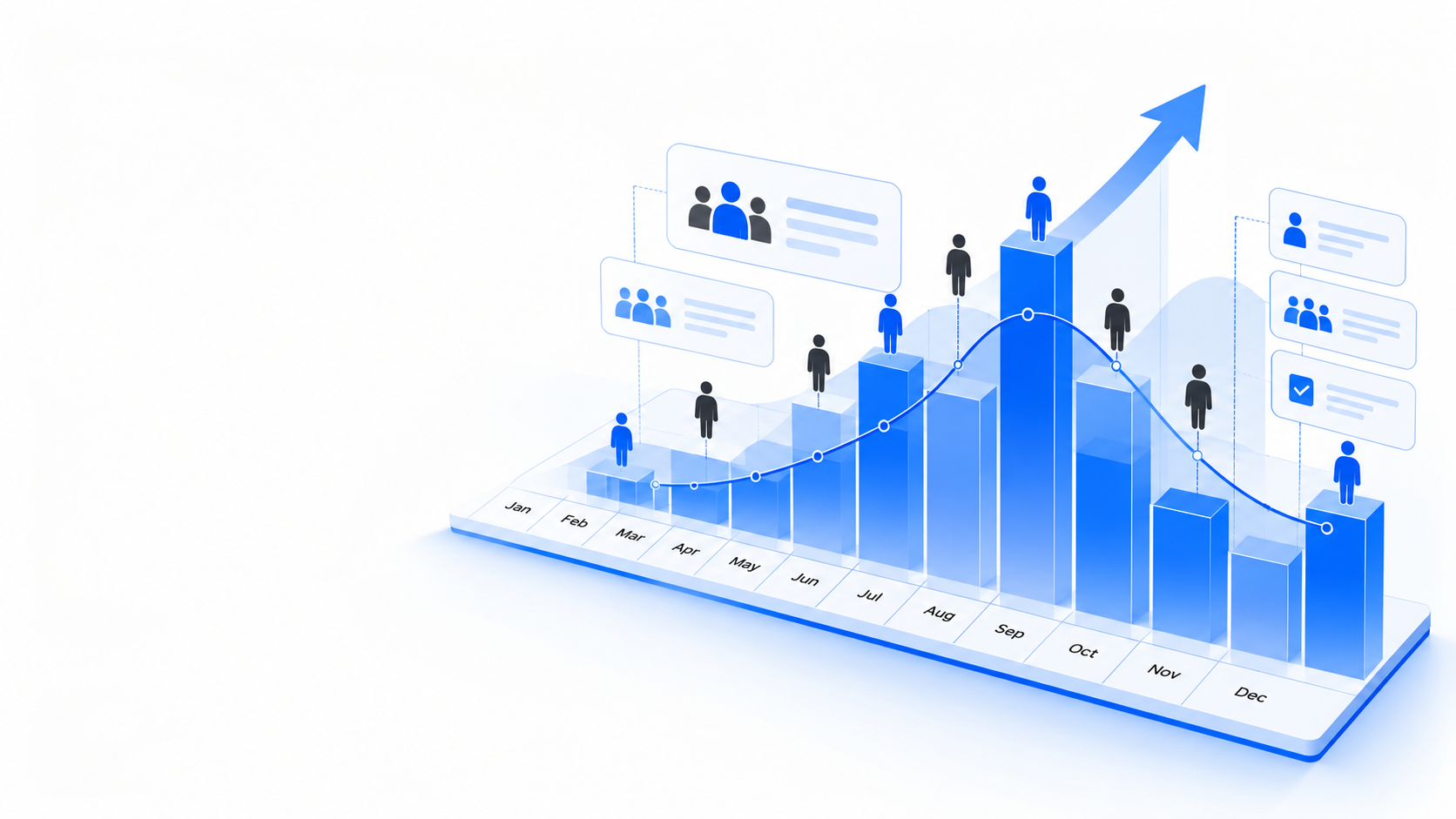
Contingent workforce planning helps organizations estimate how much external talent they may need, when they will need it, and where…

Managed payroll services move much of the day-to-day payroll administration to a third-party provider. The provider can handle payroll calculations,…