Every Nurse Who Left Last Quarter Still Has System Access. Do You Know How Many?
A Number That Should Keep Every Healthcare CISO Awake Think of it as digital sediment. Every employee who joined and…
The network perimeter did not evolve; it evaporated. For decades, enterprise security relied on the physical and logical boundaries of the data center, but that architecture has been rendered obsolete by the sheer distribution of the modern stack. Today, the only persistent element across the hybrid cloud, the remote workforce, and the API ecosystem is the identity of the actor. In this reality, Zero Trust is no longer a philosophical goal to be achieved; it is an operational requirement subsumed by identity. Organizations that continue to treat identity and access management services as a secondary administrative function are attempting to secure a perimeter that no longer exists.
The perimeter didn’t move to the cloud; it dissolved into the request. When an employee accesses a SaaS application from an unmanaged device, or an automated AI agent triggers a serverless function via an API, there is no network “inside” to protect them. The environment is now composed entirely of ephemeral connections between disparate entities.
In this architecture, machines are authenticating more frequently than humans. The volume of non-human identities—service accounts, containers, and autonomous bots—now dwarfs the traditional user directory. These entities operate across boundaries that firewalls cannot see, and VPNs cannot bridge. The perimeter has become invisible because it is no longer a place; it is a discrete cryptographic decision made at the moment of interaction.
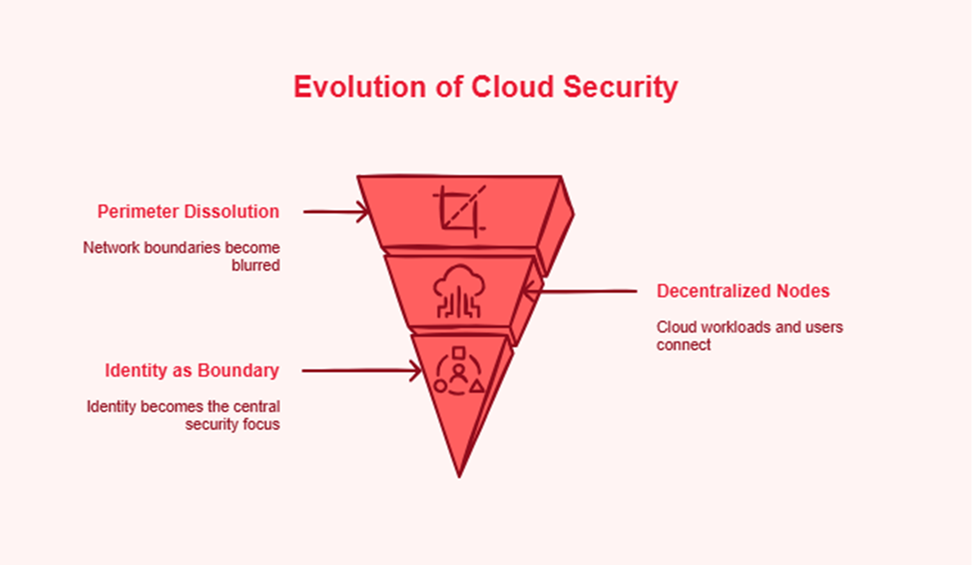
Zero Trust was a necessary framework for shifting mindsets, but frameworks are open to interpretation and often stall at the policy level. Infrastructure, however, is enforced. We are moving past the “Zero Trust project” phase and into a period where identity is the fundamental execution layer of the enterprise.
Read also: Is your organization truly secure? How to use AI to answer this question?
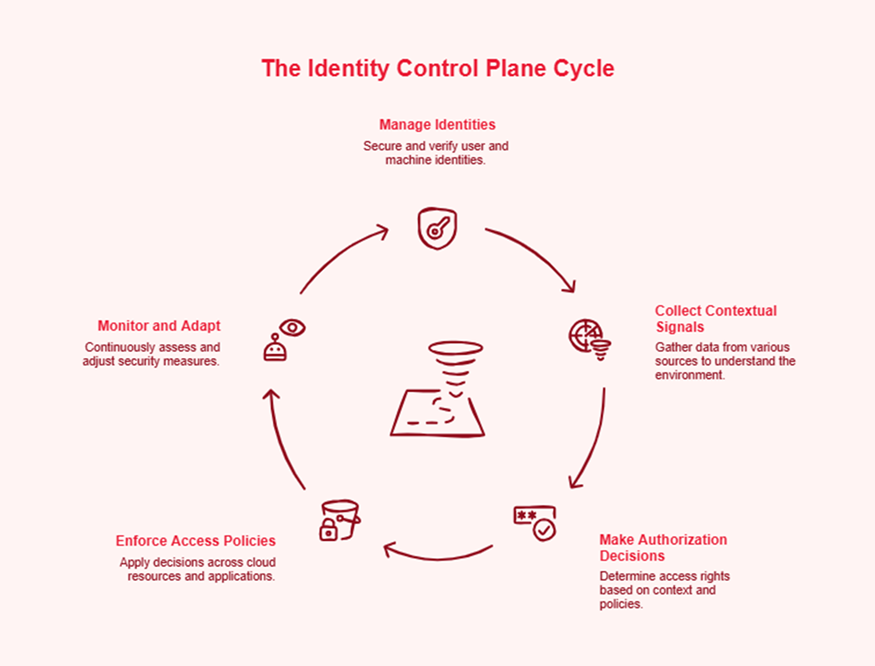
This is the point at which identity and access management services transition from a toolset for password resets to the organization’s central control logic. When trust is never assumed, every request must be brokered. That brokerage requires a high-scale, low-latency engine capable of evaluating context, telemetry, and entitlement in real-time. By using identity and access management services as core infrastructure, the enterprise moves away from static, perimeter-based access control and toward a dynamic, per-request authorization model. In this model, the “control plane” is the only thing that matters, as it is the only place where security policy and operational reality actually meet.
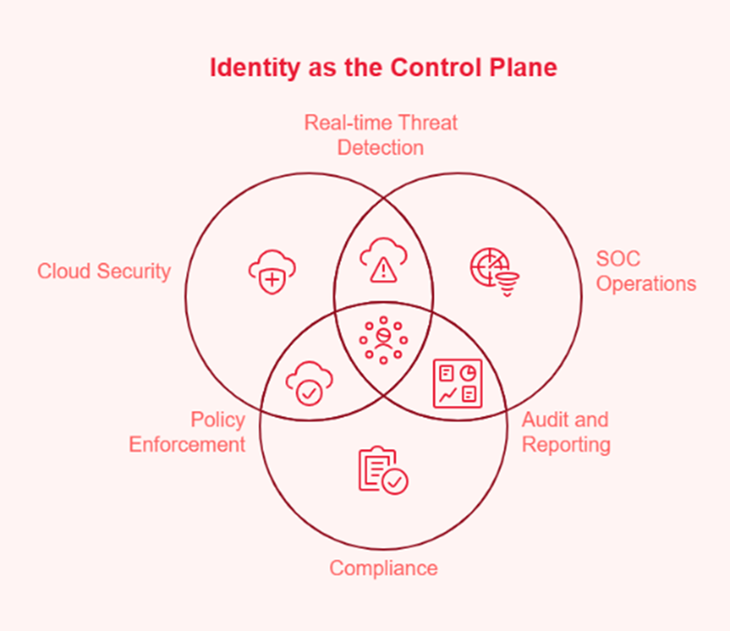
The traditional silos of security are failing because they view different fragments of the same identity-based event. Cloud security is no longer about misconfigured buckets; it is about the over-privileged roles that access them. The SOC no longer prioritizes hunting for malware signatures; it now focuses on anomalous identity behavior, lateral movement, session hijacking, and credential abuse.
Even compliance has shifted. It has moved away from periodic point-in-time audits and toward a continuous requirement to prove who accessed what, under what conditions, and for what purpose. Because identity is the only layer common to the cloud provider, the security operations center, and the regulatory auditor, these functions are naturally collapsing into a single point of truth. Relying on robust identity and access management services allows these departments to share a unified telemetry stream. When the identity is compromised, the cloud is compromised, the SOC is alerted, and the compliance posture is broken simultaneously.
The shift in architecture dictates a shift in responsibility. Identity teams can no longer function as a support wing of IT or HR.
In this environment, identity and access management services are recognized as a foundational enterprise capability. They provide the logic that governs how the business moves, making them as critical to the organization’s uptime as the network itself once was.
Zero Trust did not disappear; it solidified. It moved from a series of PowerPoint presentations into the very fabric of the modern control plane. As we enter this new year, the standard legacy strategies of “containment” must be replaced by a modern strategy of “continuous verification.” If your organization is looking to move past the buzzwords and architect a resilient identity infrastructure for 2026, it is time to ground your new plans in reality. The network-centric world is gone, replaced by a landscape where the request is the only thing that can be governed. As the enterprise continues to decentralize, the reliance on identity and access management services will only deepen. Identity became the perimeter by default, and there is no going back.
Set the standard for your 2026 security posture. Book a 1:1 strategy session to transition your identity architecture from a support function to a hardened control plane.

List of Content

A Number That Should Keep Every Healthcare CISO Awake Think of it as digital sediment. Every employee who joined and…

Meet the Hospital That Paid Twice for the Same Mistake In August 2024, Michigan's McLaren Health Care went dark. Ransomware.…