Every Nurse Who Left Last Quarter Still Has System Access. Do You Know How Many?
A Number That Should Keep Every Healthcare CISO Awake Think of it as digital sediment. Every employee who joined and…
For the modern C-suite, the traditional debate over “temporary staffing” has officially concluded. In its place is a more sophisticated realization: the ability to orchestrate a non-employee workforce is no longer a tactical convenience. It is a source of competitive leverage.
As we move into 2026, the global business environment is characterized by what Gartner calls “unstructured volatility.” Transformation cycles that used to span five years now compress into eighteen months. In this reality, a static, 100% permanent workforce is not an asset; it is a structural rigidity. Forward-thinking CHROs and CFOs are reframing contingent workforce solutions as a core pillar of enterprise workforce strategy, moving beyond simple cost-savings to focus on speed, resilience, and talent scalability.
Historically, contingent labor was viewed through a narrow lens of cost reduction or short-term headcount gaps. In 2026, that perspective is considered obsolete. Leading organizations have recognized that the true value of a contingent workforce strategy lies in “marginal gains” across the entire business execution layer.
When an enterprise can spin up a specialized team of data scientists to train a proprietary AI model in three weeks, rather than waiting for months for permanent hires, the advantage is measured in market share, not just hourly rates. This shift from “hiring for roles” to “buying capacity” allows the enterprise to decouple its growth from its permanent headcount limitations.
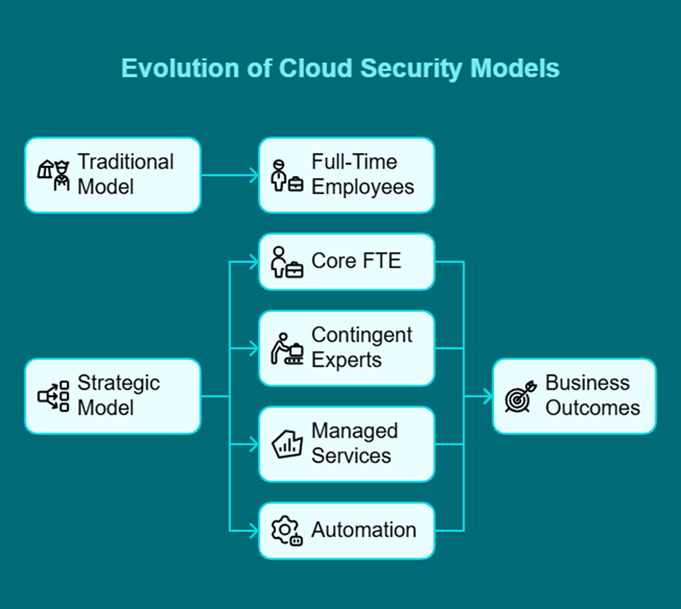
The primary barrier to digital transformation in 2026 is rarely capital; it is the “skill-to-execution” gap. World Economic Forum research highlights that the volatility of skills means that by the time a permanent employee is fully onboarded, the technical requirements of the project may have already shifted.
Strategic contingent workforce solutions allow leaders to access a “just-in-time” labor supply chain. This is particularly critical for organizations utilizing Direct Sourcing models to build private talent pools of pre-vetted specialists. When talent is treated as a fluid resource that can be deployed to specific project milestones, the organization can “burst” its capacity during critical transformation phases without the long-term drag of permanent overhead.
In previous years, the non-employee workforce was often managed in the shadows, leading to significant vendor sprawl and “shadow labor.” In 2026, “people risk” has become a board-level priority. Misclassification of workers and fragmented data are no longer just administrative errors; they are enterprise-level liabilities.
Leaders are now centralizing their contingent strategy to ensure total visibility. This involves a cross-functional intersection of HR, Procurement, and Finance. By leveraging Payrolling Services and Employer of Record (EOR) models, enterprises can scale into new global markets with confidence, knowing that compliance is baked into the operating model rather than added as an afterthought. This centralized governance transforms a chaotic “vendor list” into a transparent, high-velocity talent engine.
The organizations falling behind in 2026 are those that continue to view their workforce as a fixed asset. These companies often find themselves overstaffed during market dips and desperately under-skilled during surges. Conversely, enterprises that have mastered workforce agility use their contingent population as a shock absorber and an innovation catalyst.
This maturity is explored in depth in recent industry research regarding how human talent and machine capability must be rebalanced. The integration of AI has changed the “shape” of work, requiring more specialized, short-term experts to bridge the gap between legacy systems and autonomous workflows. Organizations that fail to integrate these external experts into their strategic workforce planning find that their internal teams become overwhelmed and their digital initiatives stall.
This shift is not just about having a few contractors; it is about building a “boundaryless” organization where the best talent can be applied to the most important problems, regardless of their employment status.
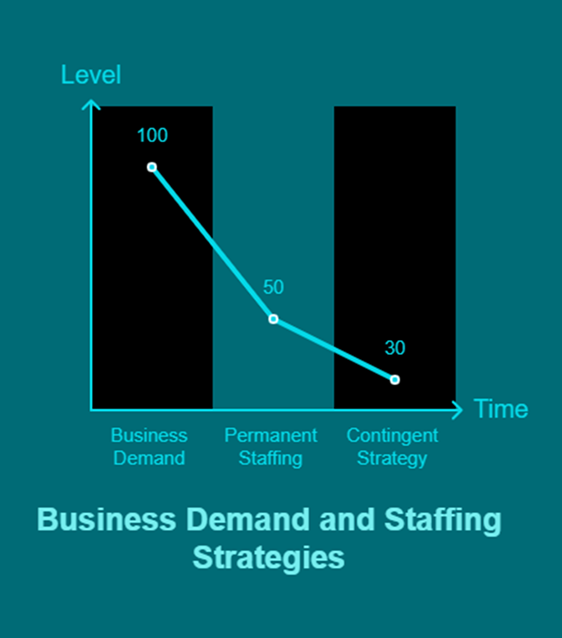
If your leadership team is still discussing contingent labor as a way to “fill seats,” the strategic conversation has been missed. The goal for the remainder of this year should be to transition from reactive hiring to proactive talent orchestration. This requires a shift in how internal departments communicate. In the most successful 2026 enterprises, the “siloed” approach to labor is gone.
Finance now views talent spend not as a line-item expense to be minimized, but as a strategic investment in talent scalability that drives revenue. HR has moved from managing employees to managing “work,” identifying the skills needed for specific outcomes rather than just managing roles. Finally, Procurement ensures the talent supply chain is resilient and compliant. Those who succeed will find that their ability to scale is limited only by their vision, not by their headcount budget.
In 2026, the competitive divide is no longer between permanent and contingent labor, but between agile and static organizations. Treating contingent talent as a strategic asset allows leaders to build resilient, responsive enterprises that do more than just fill gaps—they capture market opportunities.
Transitioning from tactical staffing to a strategic operating model requires data-driven execution. Success depends on a new playbook that balances human capability with machine efficiency while addressing the chronic scarcity of specialized expertise. By aligning labor spend with measurable outcomes and predictive capacity planning, you transform your workforce from a rigid fixed cost into a dynamic engine of innovation.
Guide Your 2026 Strategy with Data-Driven Insights
For leaders ready to move from theory to execution, our latest report provides the framework needed to navigate this shift.
Read the Report: Staffing Predictions 2026 – The Great Rebalance of Human + Machine

List of Content

A Number That Should Keep Every Healthcare CISO Awake Think of it as digital sediment. Every employee who joined and…

Meet the Hospital That Paid Twice for the Same Mistake In August 2024, Michigan's McLaren Health Care went dark. Ransomware.…