You Do Not Need a Legal Entity to Own a Global Market. You Need This
The Incorporation Trap Has a Body Count It starts with ambition. A decision is made to enter a new market…
Forget the firewall. Forget the VPN. If your organization is undergoing a digital transformation—and by 2026, every enterprise will be—your true security perimeter is no longer the network edge; it is the API.
APIs (Application Programming Interfaces) are the digital circulatory system of the modern economy. They connect your microservices, power your mobile apps, enable partnerships, and—crucially—serve as the connective tissue for emerging technologies like AI and machine learning. Gartner predicts that the use of AI alone will drive over a 30% increase in API usage by 2026, fundamentally reshaping the threat landscape.
This exponential growth means that every exposed API endpoint is a potential open door. When an API is compromised, the attacker doesn’t just breach a website; they gain direct access to the business logic, the underlying data stores, and the very functions of your organization. This is the new reality: API Security in 2026 is not an IT project; it is a non-negotiable business imperative.
In 2026, attackers are no longer seeking code vulnerabilities; they are exploiting business logic and misconfigurations, targeting the most common and critical flaws, often cited in the OWASP API Security Top 10 list.
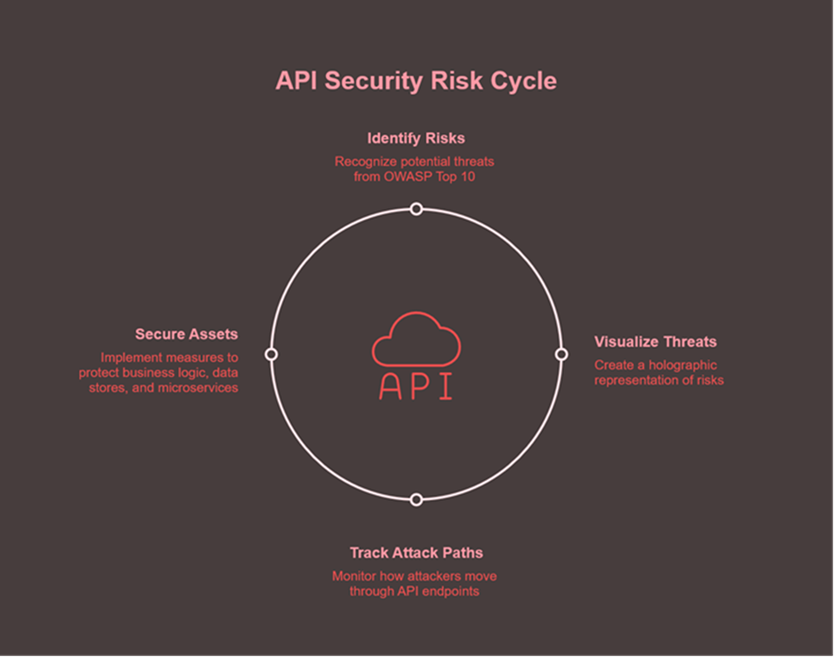
The most common and catastrophic API security risks target authorization and core functionality.
The speed of modern development has created a massive inventory problem that attackers exploit:
IDC data, cited in industry reports, indicate that up to 80% of API security breaches are caused by simple misconfigurations, not exotic code flaws.
To counter machine-speed attacks against business logic, the security industry is moving toward a highly automated, “shift-left” strategy, grounded in Zero-Trust API principles.
The traditional API Gateway is transforming from a simple traffic manager into a sophisticated security sentinel.
The only way to tame API sprawl is through mandated, automated governance.
A) API Security Governance: This is the comprehensive framework—a foundational element of Cyber Strategy & Governance—that defines how APIs are designed, built, and maintained. It mandates:
B) Visibility and Inventory Management: Using API discovery tools to automatically map all live, shadow, and zombie APIs. You cannot secure what you cannot see, making a real-time, centralized inventory essential for Security Operations.
In a Zero-Trust world, every API request, even from an internal service, must be verified. This requires a strong Identity & Access Management strategy.
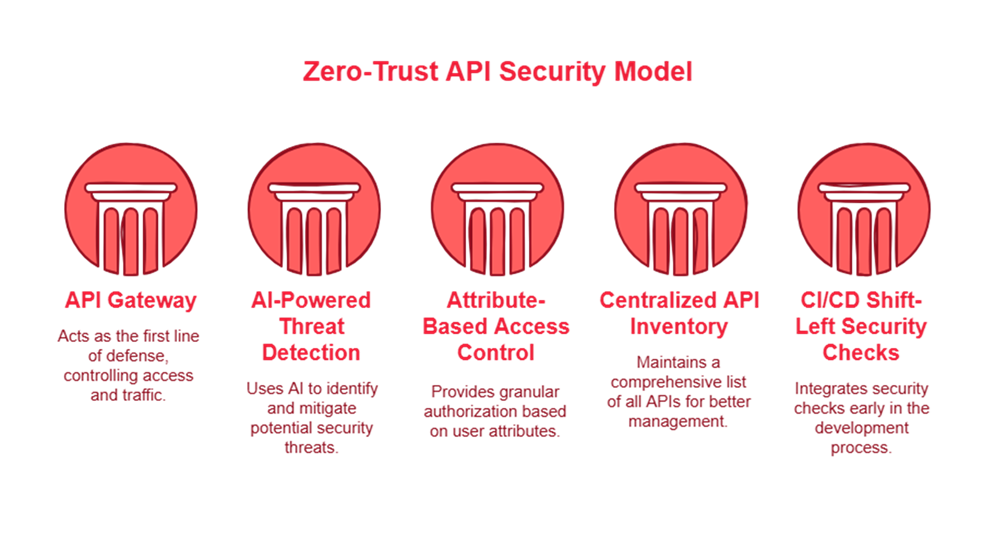
By 2026, APIs won’t just support your business — they’ll define it. And that also makes them the No. 1 attack vector. When your most sensitive data and core workflows live inside APIs, perimeter security becomes a relic. The future belongs to organizations that embrace governance-first, Zero-Trust, intelligence-driven protection woven directly into their business logic.
The enterprises that pull ahead in this AI-powered, API-first decade will be the ones that treat API security as a boardroom priority, not a backend chore. Because the threat landscape is moving faster than traditional tools can react — and attacks like BOLA, shadow APIs, and business logic abuse are already outpacing outdated defenses.
Don’t wait for a breach to become your wake-up call. Compunnel secures the digital backbone of modern enterprises with end-to-end API Security Governance, AI-powered threat detection, and protection engineered for scale.
Ready to get ahead of 2026’s API threat curve?
👉 Book a free Cybersecurity Strategy Session with us and get your custom API security roadmap:
https://www.compunnel.com/free-cybersecurity-strategy-session

List of Content

The Incorporation Trap Has a Body Count It starts with ambition. A decision is made to enter a new market…

The Hiring Crisis Nobody Saw Coming (Except Everyone Did) Picture this: a mid-sized fintech company in New Jersey posts a…