Contingent Workforce Planning: Forecasting Flexible Headcount for the Year Ahead
Contingent workforce planning helps organizations estimate how much external talent they may need, when they will need it, and where…
Select location
Payroll software gives your team the tools to run payroll yourselves; managed payroll hands the process – calculations, filings, and compliance – to a specialist provider. Software usually suits companies with stable, fixed location payroll and in-house expertise. Managed payroll wins when multi-state or multi-country complexity, compliance risk, or thin payroll staffing threaten accuracy.
The bottom line
Buy payroll software when your payroll is stable, single-jurisdiction, and you have in-house expertise to run it. Choose managed payroll when multi-state or multi-country complexity, compliance risk, or thin payroll staffing make it safer to hand the process to a specialist. Not sure? Use the 6-question framework below.
Payroll software is a platform your team operates. You enter hours and pay changes, run each cycle, file taxes, and answer employee questions. The vendor supplies the technology and tax tables; your people supply the labor and carry the compliance responsibility.
Managed payroll (also called payroll outsourcing or fully managed payroll) is a service. A provider runs the payroll cycle for you: gross-to-net calculations, tax filings, benefits management, statutory reporting, payslips, and year-end forms. Your team approves inputs and outputs; the provider does the processing and owns accuracy under a service-level agreement.
The market has moved decisively toward the service model for complex payrolls. Fully managed outsourcing accounted for 62% of the global payroll outsourcing market in 2025, driven mainly by enterprise demand to transfer end-to-end payroll accountability (IMARC Group, 2025). But that doesn’t make it the right answer for every company – which is what the rest of this guide works through.
The table points to a simple pattern: software optimizes for control, managed payroll optimizes for capacity and risk transfer. Cost sits in the middle, because the honest cost comparison includes people, not just fees. That’s the next section.
The sticker prices mislead in both directions. Payroll software looks cheap until you add the people who run it; managed payroll looks expensive until you subtract them.
The software model’s real cost is subscription fees plus fully loaded payroll staff. U.S. payroll and timekeeping clerks earn a median of roughly $55,000 a year before benefits and overhead U.S. Bureau of Labor Statistics, 2024; a payroll manager runs materially higher. A 500-employee company typically needs two to three payroll staff once you account for coverage, year-end, and multi-state filings — $180,000 to $300,000 a year fully loaded, on top of software fees.
Automated tax filing, on-time payments, and full compliance across the US and Canada, so your team can focus on growth, not paperwork.
The error line item is real in both models, but it’s priced differently. According to an EY survey, one in five payrolls in the United States contains errors, with each error costing an average of $291 to identify and correct. Under a software-only payroll model, organizations bear the cost of remediation and any associated compliance risks. In contrast, managed payroll providers typically include accuracy commitments and issue-resolution obligations within their service-level agreements (SLAs). This is exactly why payroll accuracy is so closely tied to employee trust
The managed model’s real cost is a per-employee-per-month fee that bundles processing, filings, and support. For the same 500-employee company, the fee often lands below the fully loaded internal team it replaces — but only if you would otherwise have staffed that team. A company running lean and error-prone isn’t saving money; it’s deferring cost into penalties and rework.
Run the comparison on three lines: software fees plus fully loaded staff; the managed fee; and your last two years of payroll penalties, corrections, and off-cycle runs. The third line is the one most buyers forget, and it’s frequently the deciding one.
Keeping payroll in-house on good software is the right call more often than outsourcing providers admit, especially as platforms lean on AI and automation to simplify payroll processing. It’s a strong fit when you can check these boxes:
✓
Your payroll is structurally simple.
One country, few states, standard pay elements, and predictable cycles.
✓
You already have the team.
Experienced payroll staff with capacity are an investment worth using.
✓
Headcount is stable.
No hiring surges, acquisitions, or new-market entries on the roadmap.
✓
Control is a genuine requirement.
Some industries and works-council environments need direct, in-house handling of pay data.
✓
Payroll is tightly coupled to your HRIS.
If your platform already runs time, benefits, and HR in one database, adding an external processing layer can create more handoffs than it removes.
💡
Quick check
If most of these describe your organization, buying software and running payroll in-house will usually cost less and give you more control than outsourcing.
Managed payroll earns its fee when complexity or volatility outruns your internal capacity. About two-thirds of organizations now co-source or outsource at least part of payroll operations rather than run everything in-house (EY Global Payroll Survey, 2021) — and the triggers are consistent:
“The question we ask buyers isn’t ‘software or service’ — it’s ‘where do you want your team’s hours to go?’ If payroll staff spend their weeks chasing state notices instead of supporting the business, the model is wrong regardless of what the software costs.” —
Yes – and for many mid-market companies this is the practical answer. In a co-managed (or hybrid) arrangement, your team keeps the payroll platform and controls inputs, while the provider handles the high-risk layers: tax filings, statutory compliance, year-end forms, and multi-jurisdiction reporting. Co-managed outsourcing made up 38% of the global outsourcing market in 2025, concentrated among organizations that want oversight without carrying the full compliance load internally (IMARC Group, 2025).
Co-managed works either as a permanent operating model for companies that value control, or as a transition stage for companies moving toward fully managed payroll as they scale. Either way, it converts the buying decision from either/or into a division of labor.
Score yourself honestly on each question. Three or more ‘yes’ answers point toward managed or co-managed payroll; fewer point toward staying on software.
If you scored high but still want platform control, evaluate co-managed first. If you scored low, invest in your software configuration and team — outsourcing would add a management layer without removing much work.
Is managed payroll more expensive than payroll software?
Software fees are lower, but the model requires internal payroll staff — often $180,000–$300,000 a year fully loaded at 500 employees. Managed payroll’s per-employee fee bundles that labor. Compare total cost of ownership, including error correction, which EY prices at an average of $291 per payroll error (EY, 2022).
What does a managed payroll provider actually do?
The provider runs the payroll cycle end to end: gross-to-net calculation, tax withholding and filings, statutory reporting, payslip delivery, year-end forms, and support for payroll queries. Your team approves inputs such as hours and pay changes, and signs off outputs. Accountability for accuracy and deadlines sits with the provider under a service-level agreement.
Can we keep our current payroll software and still outsource?
Yes. Co-managed payroll keeps your platform and your control of inputs while a provider handles filings, compliance, and year-end. It accounted for 38% of the payroll outsourcing market in 2025 (IMARC Group, 2025) and is the most common entry point for mid-market companies.
Who is liable if payroll is wrong under a managed payroll contract?
Legal liability to tax authorities and employees generally remains with the employer — outsourcing doesn’t transfer statutory obligations. What a managed contract does is make the provider financially accountable to you for errors within its scope, through SLAs, remediation commitments, and indemnities. Review those clauses carefully before signing.
What’s the difference between managed payroll, a PEO, and an EOR?
Managed payroll runs the payroll process for people you employ. A PEO co-employs your U.S. workforce and bundles benefits and HR administration. An employer of record (EOR) goes further: it legally employs workers on your behalf, typically in countries where you have no entity. Growing internationally, companies often use managed payroll where they have entities and an EOR where they don’t — see our step-by-step guide to cross-border hiring for how to plan that mix.

List of Content
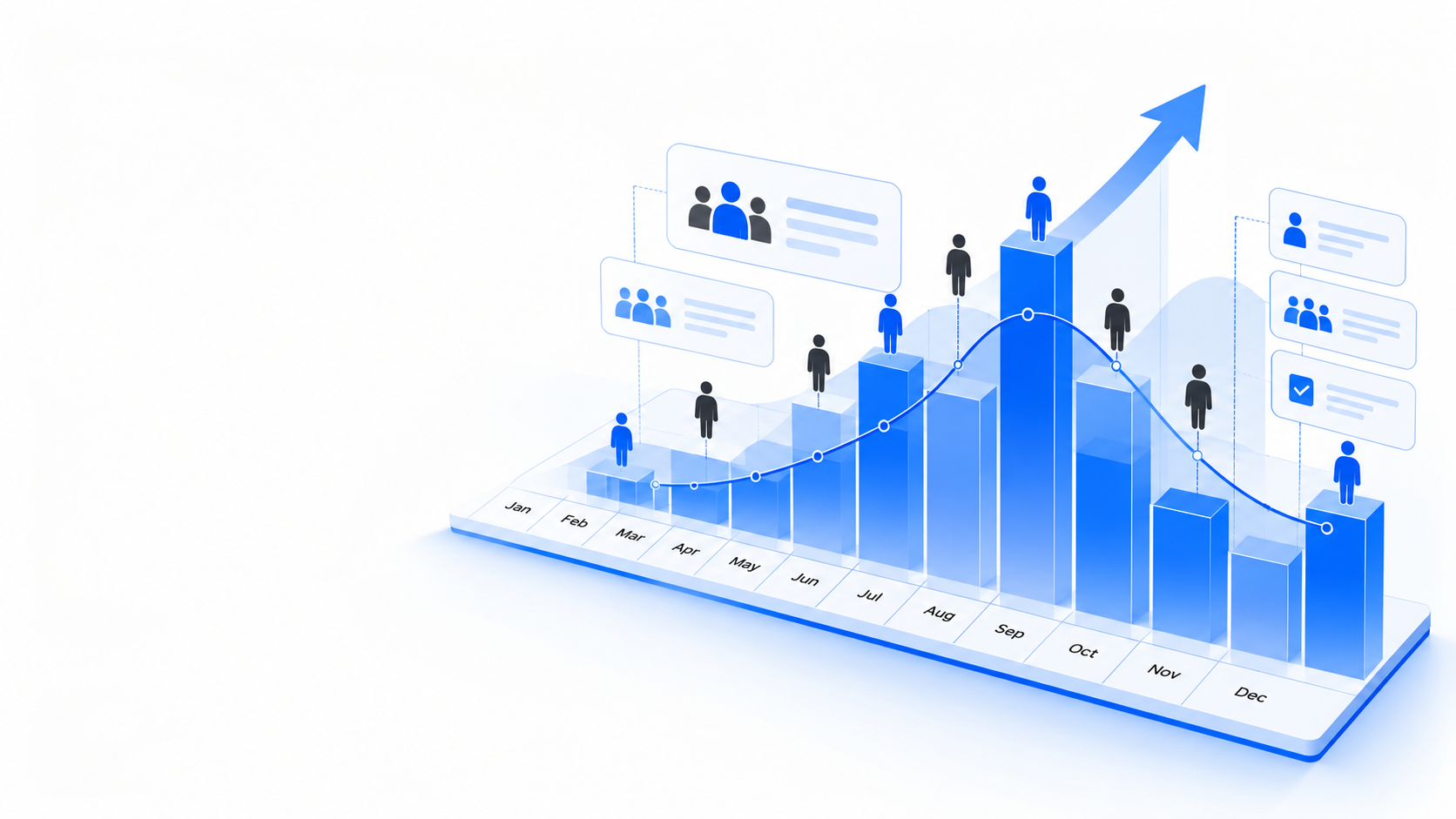
Contingent workforce planning helps organizations estimate how much external talent they may need, when they will need it, and where…

Managed payroll services move much of the day-to-day payroll administration to a third-party provider. The provider can handle payroll calculations,…