Contingent Workforce Planning: Forecasting Flexible Headcount for the Year Ahead
Contingent workforce planning helps organizations estimate how much external talent they may need, when they will need it, and where…
Select location
A tech startup in Berlin hired three engineers remotely: one from the UK, one from India, one from Brazil. HR classified them all as independent contractors to “simplify payroll and save costs.” The company figured they could skip Germany’s mandatory pension contributions, the UK’s employment rights, India’s labor law requirements, and Brazil’s eSocial digital reporting system.
Eighteen months later, a tax audit hit. Back payroll taxes in Germany. Unpaid statutory contributions in the UK. Labor law exposure in India and Brazil. Reputational damage when the story spread. The company had saved perhaps $12,000 in contractor fees; the total liability ran into six figures. The true cost of misclassification nearly ended the business.
This isn’t an edge case. Studies of worker classification have estimated that a meaningful share of employers – some research suggests 10–30% – misclassify at least one worker. And with tax authorities in a growing number of countries receiving payroll data digitally and in near real time, the days of “flying under the radar” are over.
Global payroll compliance is no longer optional. It’s the foundation of scalable, safe international hiring. This guide walks you through the risks, the penalties, the most common mistakes – and how to protect your business.
Note: Penalty figures and rates below are illustrative ranges based on published guidance and reported cases as of publication. They change frequently and vary by jurisdiction and circumstances – always confirm current requirements with qualified local counsel.
Global payroll compliance means paying employees and contractors across multiple countries in full adherence to each jurisdiction’s tax laws, labor regulations, social contribution requirements, and reporting standards.
It sounds straightforward. It isn’t. Here’s why:
Every country defines “employee” differently. What’s an employee under German law may be a contractor under Singapore law. Misclassify, and you’ve violated both simultaneously.
Tax withholding varies by jurisdiction. Germany requires income tax withholding and pension contributions of roughly 18–19% of salary (split between employer and employee). Brazil mandates a 13th-month salary (décimo terceiro). France requires employee representation (CSE) once headcount reaches 11. Miss any of these and penalties follow.
Reporting is going digital – and fast. A growing number of countries require payroll data submitted electronically, on strict, sometimes event-based deadlines. Brazil’s eSocial, France’s DSN, and the UK’s RTI all penalize late or inaccurate submissions. Even short delays can trigger fines.
Manual processes don’t scale. Spreadsheets and country-by-country improvisation are how errors — and audit flags — happen.
The cost of getting compliance wrong is staggering. Misclassifying a single $50,000/year employee for three years can cost $15,000–$100,000+ in back taxes, penalties, interest, and legal fees combined. Multiply that across five or ten misclassified workers and you’re looking at company-ending liability.
This is the most common and costly mistake. A company hires someone full-time, sets their schedule, controls their work, provides equipment – but calls them a “1099 contractor” to avoid payroll taxes and benefits.
In the US, the IRS catches this via form mismatches, audit triggers, or worker complaints. The penalties are severe:
Illustrative example: A company misclassifies 10 contractors for 2 years. The audit reveals $120,000 in unpaid payroll taxes, $30,000 in penalties, $45,000 in interest, plus $50,000 in legal defense costs. Total: $245,000 in liability for what was assumed to be “cost savings.”
The flip side: a contractor later claims they should have been an employee. They demand back pay, benefits, overtime, and workers’ compensation. Gig-economy companies have paid heavily for this – New Jersey assessed Uber and a subsidiary $100 million in back unemployment and disability contributions over driver classification, and Lyft has paid multi-million-dollar settlements over similar claims.
Exposure: Back pay + liquidated damages (often 2–3x unpaid wages) + overtime liability + benefits contributions. Class actions across many contractors can reach millions in damages.
Many companies fail to account for mandatory contributions that vary dramatically by country. Examples:
Each country has strict labor laws. Violate them and you face:
A growing number of countries now require payroll data submitted digitally on strict deadlines — some event-based, some per pay run. Miss a deadline or submit inaccurate data, and you can be flagged automatically for audit.
Examples: Brazil (eSocial, event-based), France (DSN, monthly/event-based), UK (RTI, on or before each payday). A single late submission can trigger penalties from a few hundred to several thousand dollars depending on jurisdiction.
Companies misclassify workers as contractors for one reason: cost. A US employee earning $50,000/year costs the employer an additional 7.65% in FICA taxes, plus benefits, plus compliance overhead. Classifying them as a contractor appears to save thousands annually in direct payroll costs.
But this “savings” evaporates the moment you’re audited. The hidden costs:
Uber and its subsidiary Rasier were assessed $100 million by New Jersey for unpaid unemployment and disability contributions after the state determined roughly 300,000 drivers had been misclassified as independent contractors. The company assumed contractor classification would reduce regulatory burden. Instead, it created exponential liability – and similar enforcement actions have followed in other states and countries.
Each country has unique compliance requirements that, if missed, trigger immediate liability. Here’s a snapshot of high-risk jurisdictions:
| Country | Key Compliance Requirements | Common Violations & Penalties | Risk Level |
|---|---|---|---|
| Germany | Mandatory pension (~18–19%, shared) Digital payroll reporting Strict termination laws Works Council rights (50+ employees) |
Missing pension: back contributions + fines Late filings: escalating penalties Wrongful termination: months of salary |
VERY HIGH |
| Brazil | Mandatory 13th-month salary (Décimo Terceiro) FGTS severance fund eSocial event-based reporting Strict contractor enforcement PLR where collectively agreed |
Missing 13th-month salary: wage claims + fines Late eSocial submissions: penalties + audit Worker misclassification: back contributions + penalties |
VERY HIGH |
| United Kingdom (UK) | National Insurance contributions Auto-enrolment pension (minimum 8%) RTI filings on or before payday Holiday pay accrual Right-to-work checks |
Missing NI: HMRC penalties up to 100% of unpaid tax Pension non-compliance: per-worker fines Late RTI filings: escalating penalties |
HIGH |
| France | CSE (employee representation) at 11+ employees DSN digital reporting Strict termination rules 35-hour statutory workweek (overtime beyond this limit) |
CSE non-compliance: penalties + delays Late DSN filings: per-filing fines Wage violations: fines + back pay |
HIGH |
| India | EPF contributions (12% employer contribution) Gratuity (15 days’ wages per year of service) Complex contractor regulations Increasing compliance enforcement |
EPF non-compliance: penalties + interest Gratuity non-payment: wage claims Worker misclassification: back contributions + fines |
HIGH |
The opposite risk: hiring someone as a contractor when they should legally be an employee. They later claim wage theft, demand back benefits, and sue for damages. This pattern has driven class actions across the gig economy and content moderation industries.
What makes a worker legally an employee (not a contractor)?
Liability: Back wages + liquidated damages (often 2–3x unpaid overtime) + health insurance costs + retirement contributions + attorney fees. A class action with 50 misclassified workers can easily exceed $5M in settlements.
An EOR doesn’t eliminate compliance — it transfers the risk to an expert. Here’s what changes:
The EOR assumes the legal employment relationship. They become the formal employer, not you. This means they own the compliance liability for payroll taxes, statutory benefits, labor law adherence, and regulatory reporting.
Expert classification. EOR teams know each country’s worker classification rules deeply. They won’t misclassify an employee as a contractor or vice versa.
Automated compliance. EOR systems auto-calculate payroll taxes, pension contributions, statutory bonuses (the 13th-month salary in Brazil, for example), and deductions. Manual errors drop dramatically.
Digital reporting handled. The EOR integrates with government reporting systems (Brazil’s eSocial, France’s DSN, the UK’s RTI) and handles submissions on your behalf, meeting tight deadlines.
Audit-ready documentation. Every payroll cycle generates audit trails, compliance reports, and documentation that prove adherence to local law. If audited, the EOR can defend the record.
Regulatory change management. EOR compliance teams monitor wage law updates, tax code changes, and benefit requirement shifts. When contribution rates or reporting requirements change, the EOR updates their systems immediately.
EOR costs vary by country, headcount, and provider — typically $200–$800+ per employee monthly. While pricing matters, the compliance value usually justifies the investment on its own: a single misclassification penalty ($15k–$100k+ per worker) or audit-related fine far exceeds annual EOR fees.
For a detailed breakdown of EOR pricing, budget calculators, and cost comparisons, see: Employer of Record Pricing: What You Actually Pay & How to Choose Right
Review every worker classification. Are contractors truly independent (set their own schedule, serve multiple clients, bear profit/loss risk)? Or are they functioning as employees? Document your reasoning for each classification.
List every country where you have employees or contractors. For each, research: mandatory contributions, digital reporting deadlines, termination laws, misclassification penalties. Countries like Brazil, Germany, the UK, France, and India are high-risk.
Create a checklist for hiring in each country. Include: required forms, tax ID registration, benefits enrollment deadlines, first payroll rules, and a contractor vs. employee determination process. Assign an owner.
For countries beyond your expertise, bring in an EOR or global payroll firm. Don’t try to DIY Germany or Brazil. The compliance liability far outweighs the cost of outsourcing.
Have your finance/HR team subscribe to regulatory update sources. Every country changes tax codes, minimum wages, and labor laws. If you miss an update and fail to implement the change, you’re non-compliant from day one of the new rule.
Global payroll compliance is complex. But the framework is knowable. Start here:
For comprehensive EOR services that handle payroll compliance, tax reporting, statutory benefits, and regulatory updates across 150+ countries, visit Compunnel’s Employer of Record Services page or contact our compliance team.
International employment compliance is not a nice-to-have. It’s a legal requirement with penalties that routinely reach five and six figures per violation. The cost of non-compliance far exceeds the cost of getting it right from the start.
Whether you hire through an EOR or manage payroll in-house, the framework is the same: classify workers correctly, understand country-specific requirements, automate compliance wherever possible, and partner with experts in high-risk jurisdictions.
Global hiring is the future. Compliant global hiring is the only sustainable option.
Penalty ranges reflect published government guidance and reported enforcement actions as of publication and are illustrative, not legal advice.

List of Content
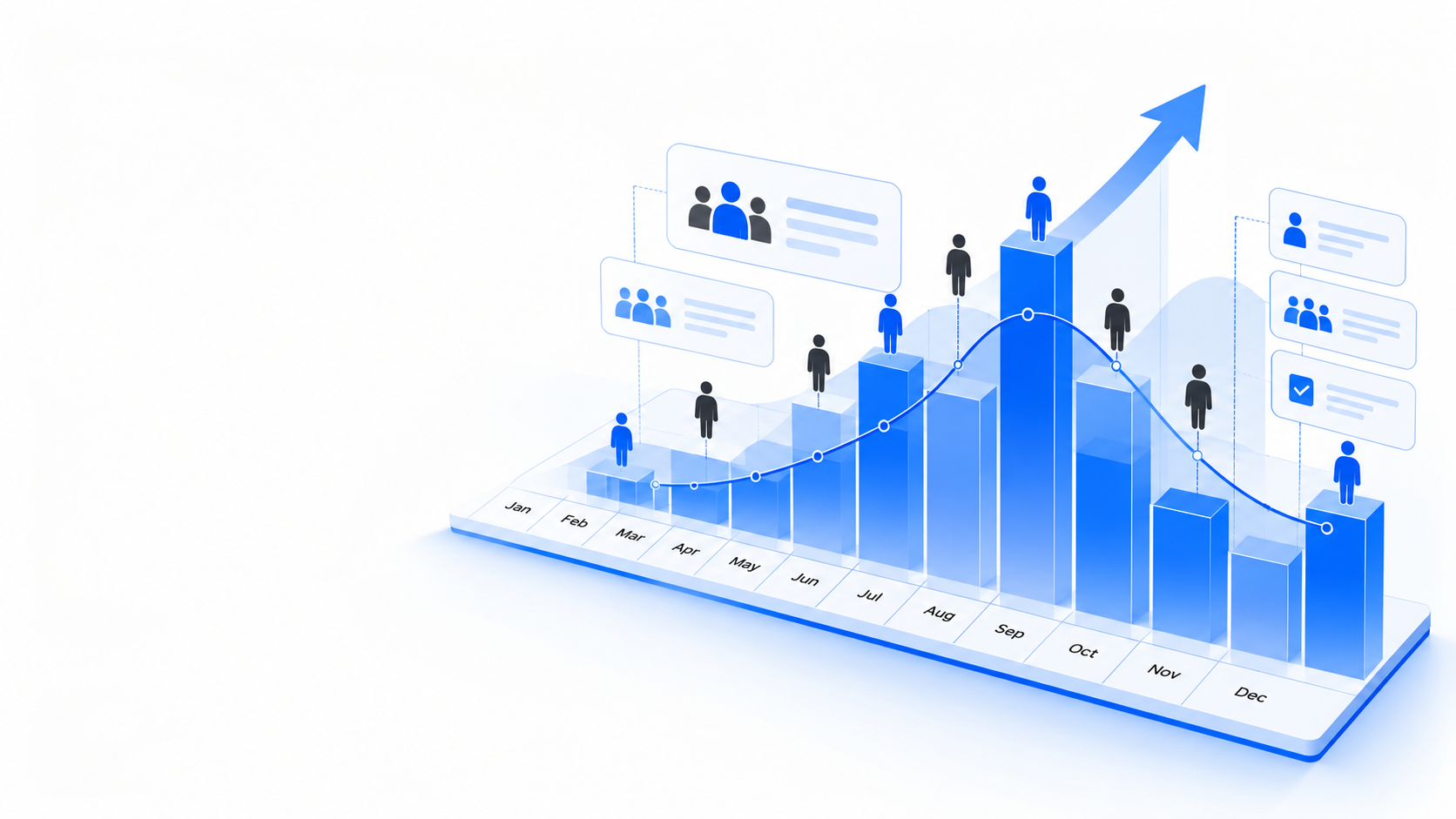
Contingent workforce planning helps organizations estimate how much external talent they may need, when they will need it, and where…

Managed payroll services move much of the day-to-day payroll administration to a third-party provider. The provider can handle payroll calculations,…