Contingent Workforce Planning: Forecasting Flexible Headcount for the Year Ahead
Contingent workforce planning helps organizations estimate how much external talent they may need, when they will need it, and where…
Select location
As contingent workforce programs grow, managing staffing suppliers, worker onboarding, rates, compliance, time, invoices, and workforce data can become complex.
That is where Vendor Management Systems (VMS) and Managed Service Providers (MSP) enter the conversation. The phrase “VMS vs MSP” suggests a choice between two competing workforce solutions, but that is not quite accurate. A VMS is primarily a technology platform. An MSP is a managed service that provides people, processes, governance, and program expertise. They solve different workforce management needs, and many organizations use both together.
The right question is not simply, “Should we choose a VMS or an MSP?” It is, “What technology, program management, and governance capabilities does our workforce model need?”
A Vendor Management System is software designed to help organizations manage external workers and the suppliers that provide them. SAP describes VMS technology as software used to procure and manage an external workforce. Its contingent workforce platform supports temporary workers, freelancers, consultants, and other external talent.
Staffing Industry Analysts’ 2025 VMS research shows that VMS remains an established technology category within contingent workforce management. SAP also notes that these platforms have expanded beyond their original focus on staffing-agency workers to support areas such as statement-of-work services and direct sourcing.
Capabilities vary by platform, but a VMS may support:
SAP, for example, describes VMS capabilities that cover sourcing, engaging, managing, and paying external workers, along with supplier management, time and expense processes, billing, and services procurement.
The core value is consistency and visibility. Instead of every team following a different process, the organization can use standard workflows and maintain more workforce information in one system.
A VMS also creates data that can support better program decisions. Teams can review supplier activity, rates, worker status, spend, and other measures depending on the platform and program design.
Technology, however, does not remove the need for program ownership. A platform can route a requisition, record supplier performance, or display a report. Someone still needs to decide how suppliers should be managed, respond to performance problems, align stakeholders, and turn workforce data into action.
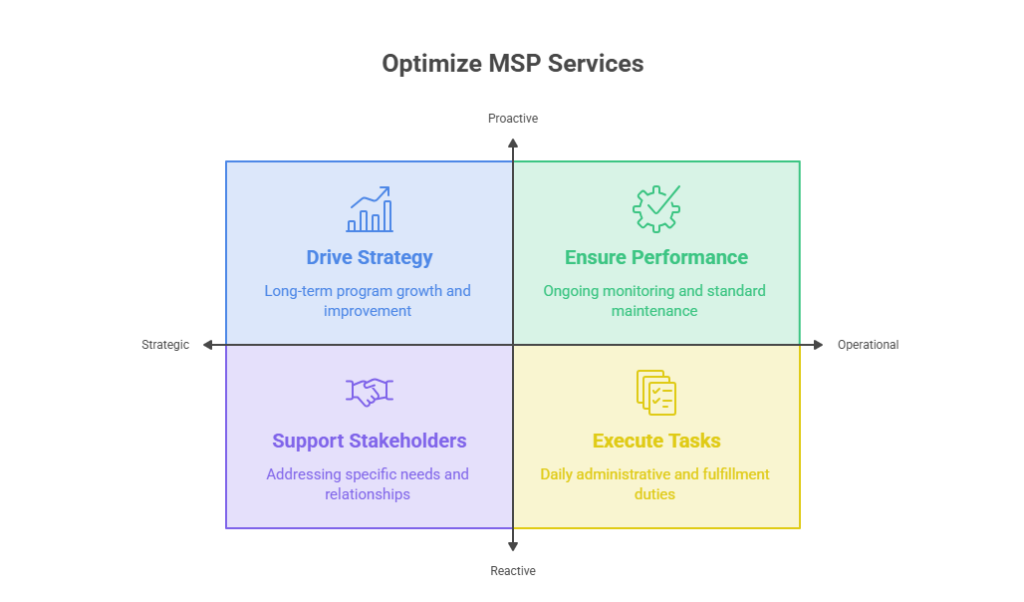
A Managed Service Provider is a service partner that manages some or all of an organization’s contingent workforce program. In this context, “managed service” is the key distinction.
An MSP does not simply provide software. It brings a program team, operating processes, workforce expertise, supplier management, governance, and ongoing support.
Randstad Enterprise describes an MSP as an extension of functions such as procurement, HR, or other human capital teams. Its MSP model can manage the external talent lifecycle from a workforce request through invoicing and payment, often using a VMS to provide visibility into external workers and talent suppliers.
This makes an MSP a service and operating model rather than a technology category.
Depending on program scope, an MSP may support:
The MSP’s role is therefore active. While a VMS can capture and organize workforce information, an MSP program team can review that information, identify issues, coordinate stakeholders, and take action. Randstad, for example, describes MSP programs that use workforce and sourcing data to assess program outcomes and continuously improve delivery.
For example, a VMS may show that one supplier has a low response rate or that bill rates vary for similar roles. An MSP can use those insights to engage suppliers, review rate structures, adjust distribution strategies, or recommend program changes.
The easiest way to understand VMS vs MSP is to compare their roles, not treat them as competing products.
A VMS is technology. Its primary purpose is to centralize, automate, and document contingent workforce processes. It gives users a system for handling transactions, workflows, workforce information, and reporting.
An MSP is a managed service. Its primary purpose is to operate, govern, and improve the contingent workforce program. It adds people and workforce expertise to the processes that technology supports.
| Area | VMS | MSP |
|---|---|---|
| Type | Technology platform | Managed service |
| Primary role | Enables workflows and visibility | Manages program execution and governance |
| Supplier management | Supports supplier processes and reporting | Actively manages suppliers and performance |
| Data | Captures and presents information | Uses information to guide program actions |
| Program ownership | Supports the process | Can own defined program activities |
| People component | Primarily technology | Dedicated program expertise |
| Can work together? | Yes | Yes |
This last point is especially important. SAP explains that its external workforce technology can support a program managed by an internal program office, an external MSP, or a combination of the two.
That is why “VMS vs MSP” should not be understood as a simple software-versus-service purchase decision.
In many enterprise contingent workforce programs, the VMS provides the technology foundation while the MSP manages the program through that technology. Randstad describes this relationship directly: an MSP can manage the external talent lifecycle while using a VMS to provide visibility into workers and suppliers.
A hiring manager may submit a contingent role through the VMS. The approved requisition can then be distributed to selected staffing suppliers based on the organization’s rules. Suppliers submit candidates in the system, while the MSP monitors activity, communicates with suppliers, and helps keep the process moving.
Once a worker is selected, the VMS can support onboarding steps, worker records, time and expense processes, and invoicing. The MSP can oversee program requirements, coordinate exceptions, work with suppliers and internal teams, and monitor whether service expectations are being met.
The same relationship applies to reporting. The VMS provides the data layer. The MSP can use that information to review supplier performance, identify process bottlenecks, examine rate trends, and recommend changes.
Beeline also distinguishes between VMS technology and MSP services when discussing different models for contingent workforce management. Its guidance describes both combined MSP/VMS arrangements and models where organizations select a VMS and a separate MSP.
The right setup depends on workforce scale, supplier complexity, internal resources, geographic reach, existing technology, compliance needs, and program goals.
A VMS-led model may work well when an organization has a capable internal contingent workforce team but needs better technology.
The company can retain program ownership while using the VMS to standardize processes, improve visibility, and reduce manual administration. SAP confirms that VMS technology can operate in programs managed by an internal program office rather than an external MSP.
An MSP-supported model may be appropriate when the organization needs additional program management capacity or specialist expertise.
The MSP can take responsibility for agreed processes, supplier management, stakeholder support, and program governance. VMS technology may form part of that delivery.
A combined VMS and MSP model can support more complex programs. The VMS provides a consistent technology environment, while the MSP provides dedicated program management.
This model can help coordinate multiple suppliers, workforce categories, locations, and business stakeholders through common processes.
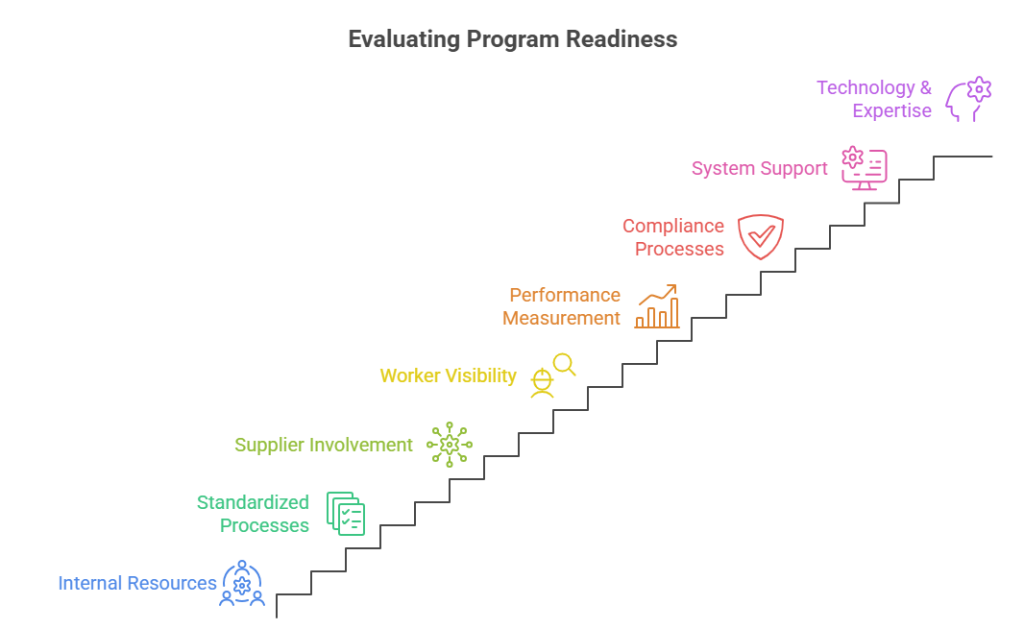
Organizations should therefore evaluate capabilities rather than labels. Before choosing a model, ask:
The VMS and MSP relationship is not limited to one sector. SAP states that external workforce management technology is used by HR, procurement, and talent teams across organizations and industries.
In technology and professional services, organizations may engage contractors for software development, cybersecurity, engineering, analytics, or project work. A VMS can organize requirements and supplier activity, while an MSP can manage a diverse staffing supply chain.
Manufacturing companies may need external workers across plants, technical functions, maintenance operations, and corporate teams. Standard processes can become important when several locations or business units work with different suppliers.
Retail, hospitality, and logistics organizations often experience changing labor demand across locations or seasons. Centralized technology and supplier management can provide greater consistency across these programs.
Healthcare and life sciences organizations may have additional credentialing, documentation, and specialized talent requirements. A structured workforce program can help coordinate these requirements across suppliers and facilities.
Financial services and other regulated industries may place greater emphasis on workforce controls, documentation, security requirements, and consistent onboarding.
Start with the current state of the program rather than beginning with a technology or provider shortlist.
Look at where work is getting delayed, where data is missing, how suppliers are managed, how much manual effort internal teams are carrying, and whether leaders have enough visibility into the contingent workforce.
Also consider future requirements. A model that works for a smaller domestic program may become harder to manage as the business adds locations, countries, workforce categories, or suppliers. Staffing Industry Analysts continues to track the development and differentiation of VMS platforms as organizations manage increasingly broad external workforce programs.
The goal should be a model in which technology, processes, responsibilities, and workforce strategy support one another. Clear ownership also matters: teams should know who manages suppliers, who owns technology decisions, and who is accountable for program performance.
Compunnel helps organizations build and manage contingent workforce programs around their business needs. Its broader talent solutions portfolio includes contingent workforce services, staffing, direct sourcing, payrolling, and Employer of Record services.
Rather than viewing VMS and MSP as competing choices, organizations can consider how technology, workforce operations, talent supply, and governance should work together within a scalable program.
A VMS is a technology platform used to manage external workforce processes and data. An MSP is a managed service that provides program management, supplier governance, workforce expertise, and operational support. They serve different roles and can be used together.
No. An MSP is a service model, while a VMS is technology. An MSP may use a VMS as part of the workforce program it manages.
Yes. An organization with sufficient internal resources and expertise can manage its contingent workforce program internally while using a VMS for workflow automation, supplier processes, and reporting. SAP notes that its technology can support both internally managed and MSP-managed program structures.
Yes. In this structure, the VMS provides the technology environment, while the MSP manages agreed aspects of program operations, suppliers, governance, and performance.
Not necessarily. Technology arrangements vary. An organization may already have a VMS, select one separately, or use technology provided or supported through an MSP. Beeline describes both combined MSP/VMS arrangements and separate VMS and MSP models.
Neither is inherently better because they perform different functions. The better question is whether your organization needs workforce management technology, external program management expertise, or both.
“VMS vs MSP” is useful for understanding two important parts of contingent workforce management, but it should not create a false choice.
A VMS provides the technology used to organize, automate, and measure workforce processes. An MSP provides the people, expertise, and governance needed to manage and improve those processes. Organizations can use them independently in some situations, but they can also operate as complementary parts of a broader workforce strategy.
By starting with program needs instead of labels, organizations can build a model that gives them the right balance of technology, visibility, control, and workforce expertise.
Get a contingent workforce assessment from Compunnel to see how we can help you find the right workforce management solution for your organization.

List of Content
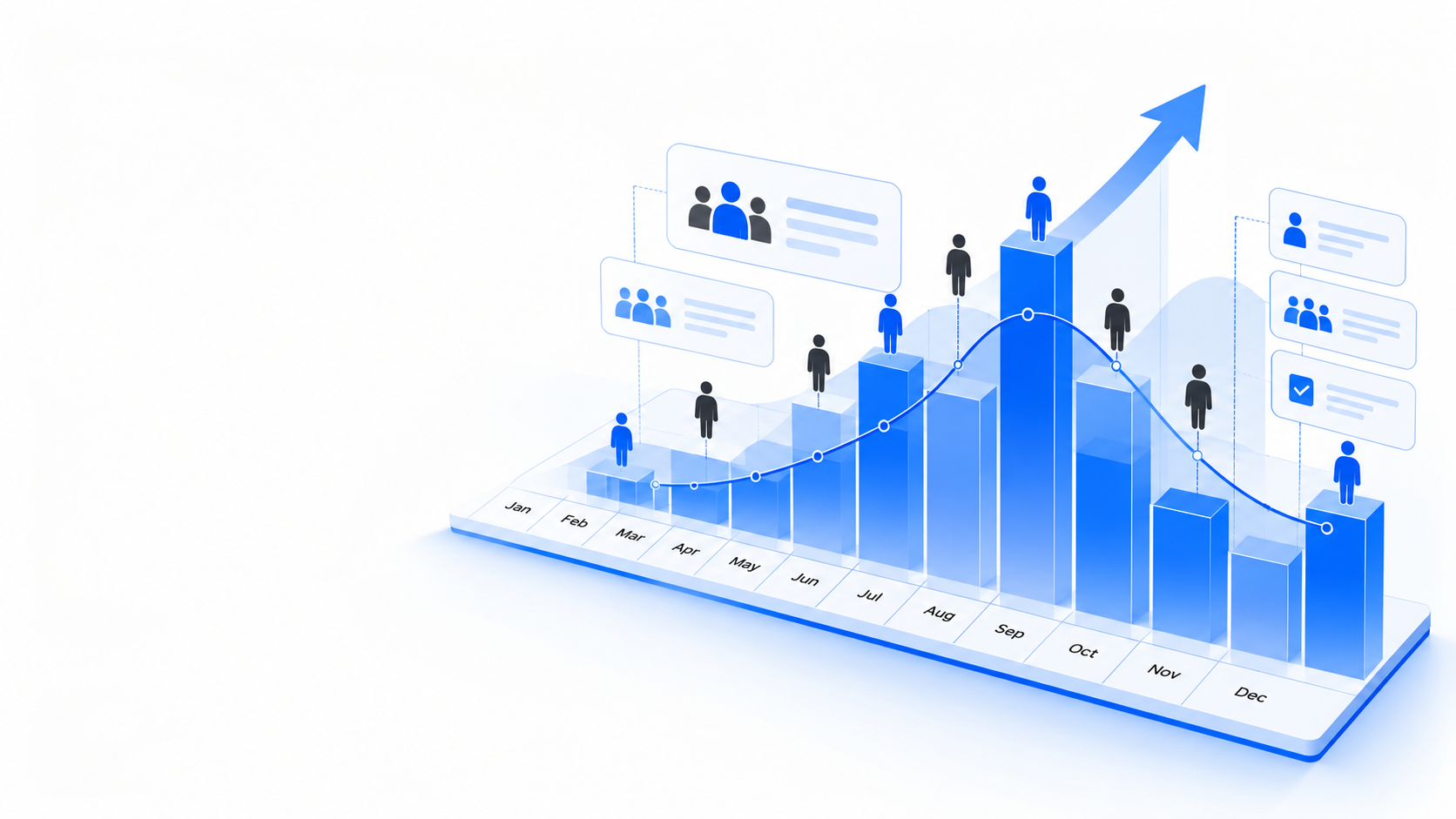
Contingent workforce planning helps organizations estimate how much external talent they may need, when they will need it, and where…

Managed payroll services move much of the day-to-day payroll administration to a third-party provider. The provider can handle payroll calculations,…