Contingent Workforce Planning: Forecasting Flexible Headcount for the Year Ahead
Contingent workforce planning helps organizations estimate how much external talent they may need, when they will need it, and where…
Select location
Payroll compliance means paying people correctly and meeting your withholding, reporting, and documentation obligations on time, everywhere you employ workers. For most organizations the day-to-day mechanics are routine. The risk is not that the rules are unknown, it is that payroll becomes harder to manage as the business grows.
Every new state, every new worker type, and every new pay structure adds obligations that someone has to own and review. Payroll compliance is less about memorizing tax rules and more about keeping registrations, data, and filings accurate as the workforce changes.
This guide is written for heads of payroll, HR and finance leaders, controllers, and workforce operations leaders. It explains where payroll compliance gets harder, what to review and confirm, what questions to ask, and when your current payroll model may no longer be enough. For specific tax or legal determinations, work with qualified advisors.
| Question | Answer |
|---|---|
| What is payroll compliance? | Paying people correctly and meeting withholding, reporting, and documentation obligations on time at the federal, state, and local levels |
| Where does it get harder? | As the workforce expands across states, worker types, and more complex pay structures |
| What should leaders own and review? | State registrations, worker data, the filing rhythm, classification, and clear ownership of each step |
| Does outsourcing payroll remove responsibility? | No. The IRS states the employer generally remains responsible for its federal employment taxes even when payroll is outsourced |
| What should be tracked or confirmed? | Deposit and filing deadlines, multi-state registrations, worker classification, and employee data accuracy |
Payroll compliance means paying people correctly and meeting your reporting, withholding, and documentation obligations on time, everywhere you employ workers. Payroll obligations can exist at the federal, state, and local levels, and they apply wherever your workers are based, not where your head office sits.
For most employers the mechanics are routine. What changes the risk picture is scale and variety: more states, more worker types, and more complex pay. The sections below focus on those pressure points rather than on individual tax rates, which the IRS and state agencies publish and update each year.
Payroll compliance complexity grows along three lines, and each one adds administrative workload and audit exposure.
A single-state team with salaried employees has a simple payroll. The same company after two acquisitions and a shift to remote hiring has a materially harder one, often before anyone has reviewed whether the payroll setup kept up.
State payroll obligations generally depend on where an employee lives and works, and the rules and exceptions vary by state. This is where growing companies most often fall behind, and it is one of the strongest reasons to review whether your payroll model still fits.
As a general rule, you register and withhold in the state where the work is physically performed. Some neighboring states have agreements that change which state is owed, and a few states apply their own rules to remote workers, so the right answer depends on the specific states involved. Confirm the obligation with current state guidance, or a qualified advisor, before the first payroll in a new state.
The practical control is simple to describe and easy to let slip: keep a current record of where every employee lives and works, make sure the right state registrations and tax forms are in place, and review it whenever someone moves. Expanding into a new state is a payroll decision as much as a hiring one.
A steady review rhythm prevents most payroll problems. Use this as a working checklist, assign an owner to each line, and confirm the current rules with the IRS or the relevant state agency rather than relying on fixed dates, which shift with weekends, holidays, and your deposit schedule.
| When | Action | Typical owner | Why it matters / what to confirm |
|---|---|---|---|
| Every payroll | Confirm new hires have their tax forms and a completed Form I-9 | Payroll + HR | Confirm Section 2 of Form I-9 is completed within three business days of the employee’s first day of paid work (USCIS) |
| Every payroll | Confirm pay rate, work state, and overtime status for each worker | Payroll | A wrong work state or status is the most common source of downstream corrections |
| Monthly | Make federal and state deposits on schedule and file new-hire reports | Payroll | Deposit schedules vary by employer size; confirm yours with the IRS |
| Monthly | Review anyone who changed address, moved states, or changed status | Payroll + HR Ops | A move can create a new state obligation before anyone flags it |
| Quarterly | File federal and state payroll returns and reconcile to your records | Payroll + Finance | Form 941 is generally due the last day of the month after each quarter ends (IRS) |
| Year-end | Issue employee and contractor statements, file annual returns, and refresh rates and wage limits | Payroll + Finance | Confirm current e-filing requirements with the IRS (electronic filing applies once you reach the information-return threshold) |
| Workforce change trigger | Review the payroll setup on any new state, acquisition, new worker type, or pay-structure change | Payroll leader + Finance | Change is when payroll setups fall out of date; review before the change goes live |
The checklist is the part most teams find useful to keep visible. The year-end and workforce-change rows are the ones most often missed.
Payroll problems rarely show up as a single dramatic event. They show up as corrections, rework, and audit findings that cost time and credibility. Controls matter because they prevent the common failure points below.
The useful response to each of these is operational: clear ownership, a review rhythm, and accurate data. That is what keeps payroll audit-ready.
Different payroll models change how much work you do and what expertise you can draw on. They change your underlying responsibility less than many buyers expect, so it is worth being precise.
| Model | What it does | What it changes | What to keep in mind |
|---|---|---|---|
| In-house + payroll software | Automates calculations, tax tables, and filing | Reduces manual effort for your team | You remain the employer and keep responsibility for your filings and the data you enter |
| Managed payroll (service provider / reporting agent) | A provider runs processing, filing, and multi-state administration | Reduces operational burden, improves consistency, and adds specialist expertise | Even when you outsource, the IRS states the employer generally remains responsible for its federal employment taxes |
| Payrolling | A third party employs certain workers you have sourced, on its own payroll | Moves day-to-day employment administration for those workers to the partner | The legal and tax arrangement depends on the structure; confirm who is responsible for what |
| Employer of record (EOR) | Becomes the legal employer in a jurisdiction for specific workers | Lets you engage workers where you have no entity | Not the same as payrolling; responsibility depends on the arrangement. The IRS distinguishes payroll service providers, reporting agents, Section 3504 agents, and certified PEOs, each with different rules |
The headline point is this: outsourcing payroll can reduce your workload and strengthen multi-state administration, but it does not automatically transfer all legal or tax responsibility. Treat managed payroll, payrolling, and EOR as distinct models, and confirm the responsibility split in each arrangement.
If you employ people internationally, you have several routes, including establishing a local entity, using a local partner, hiring through a subsidiary, or using an EOR. The right option depends on headcount, permanence, and cost, not a single default.
If you are hitting the triggers below, it is worth reviewing whether in-house payroll alone still fits, or whether managed payroll or a different model would reduce risk and workload.
In practice, the hardest part of a payroll transition is rarely the tax rules. It is multi-state onboarding and data readiness: cleaning up work locations, registrations, and worker records so the new setup starts accurate.
Form 941 is generally due the last day of the month after each quarter ends (IRS). Confirm the current date, since weekends, holidays, and your deposit history can affect it, and deposits are scheduled separately.
Usually yes, for the state where the employee works, which generally means registering there. The exact obligation depends on the states involved, so confirm with current state guidance before the first payroll.
They help you run payroll accurately and reduce workload, but the IRS states the employer generally remains responsible for its federal employment taxes even when payroll is outsourced. Responsibility stays with you.
Both involve a third party in employment, but they are different structures with different legal and tax arrangements. Confirm who is the employer of record and who is responsible for taxes in any specific arrangement.
Useful checks include on-time deposit and filing rates, multi-state registration coverage, classification reviews, and employee data accuracy. Together they show whether payroll is both accurate and audit-ready.
Compunnel’s payroll and workforce services can help organizations manage payroll operations, multi-state payroll administration, and tax administration as the workforce grows across states and worker types.
By bringing specialist support to processing, filing, and multi-state coordination, teams can reduce operational burden and keep payroll consistent as priorities change. Where it fits, payrolling and employer-of-record models can be discussed as separate options.
If payroll is getting harder to manage as your workforce expands, talk to Compunnel about building a more structured and scalable payroll operation.

List of Content
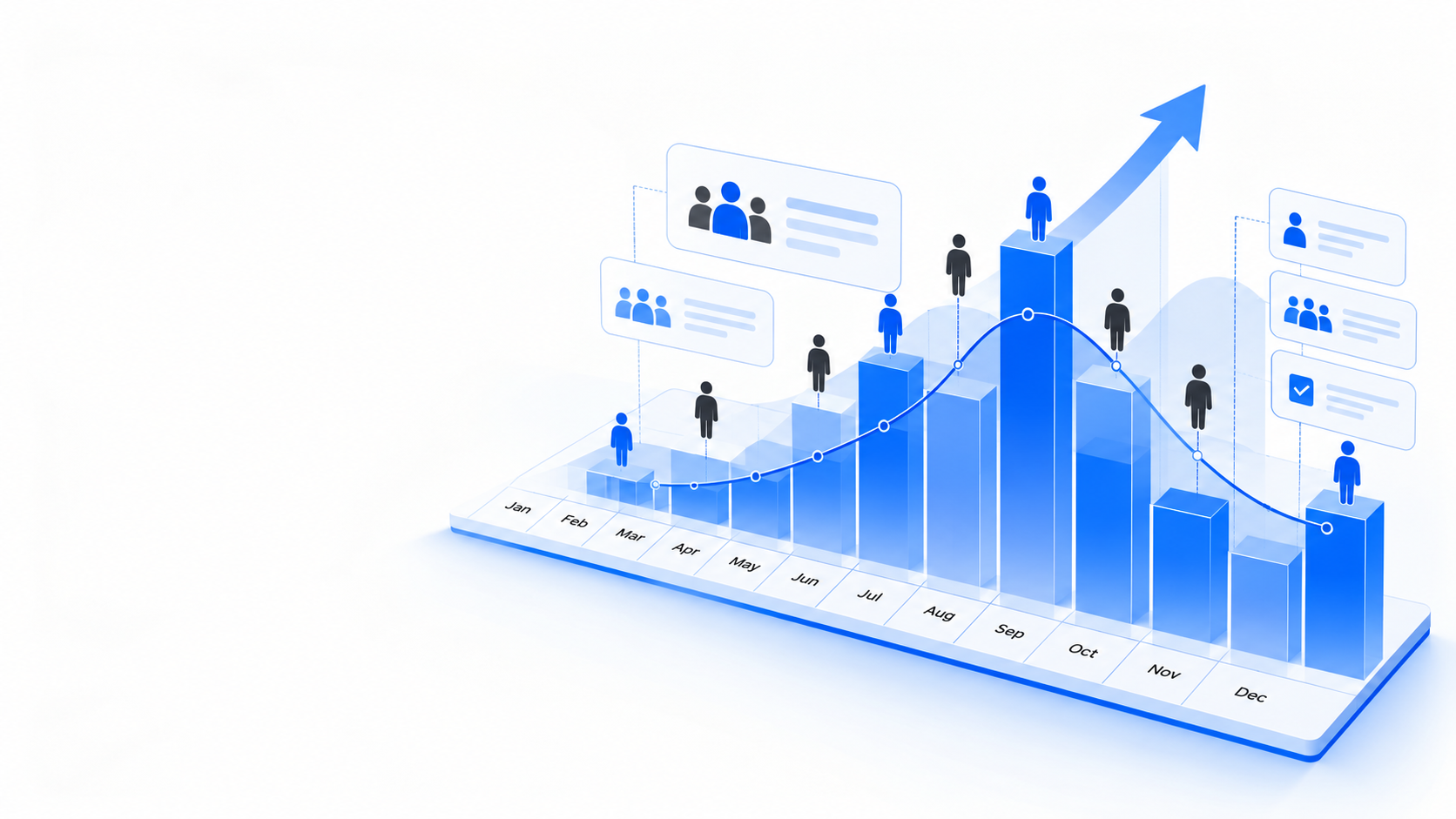
Contingent workforce planning helps organizations estimate how much external talent they may need, when they will need it, and where…

Managed payroll services move much of the day-to-day payroll administration to a third-party provider. The provider can handle payroll calculations,…