The Hybrid Hustle: How SMBs Are Rewriting Work for 2025
Hybrid work didn’t ease into the mainstream; it crashed through it. In less than five years, the traditional office model…
The silence of the modern office—or home office—often masks a deafening internal scream. We’ve all seen the symptoms: the glazed-over eyes, the sudden resignations of high performers, the sharp dip in engagement. This isn’t just workplace stress; it’s burnout, and it’s no longer an individual flaw but a profound systemic failure.
For too long, the cost of an exhausted workforce has been treated as an acceptable casualty of ambition. Today, that cost is crippling.
The staggering truth is that nearly two-thirds of the global workforce reports experiencing burnout in 2025, a crisis that has intensified since the shift to flexible and hybrid work models. This isn’t a minority issue; it’s the defining challenge of modern talent management. This crisis means that organizations can no longer view employee well-being as a peripheral benefit. It is, unequivocally, the most critical lever for well-being and retention.
For HR leaders, Talent Acquisition professionals, and CXOs, understanding the new science of well-being isn’t just empathetic—it’s the definitive path to achieving competitive advantage and building a resilient workforce.
The old-school approach to wellness was often characterized by superficial gestures: a discounted gym membership, a single pizza party, or an annual mental health webinar. These token perks, while well-intentioned, fail because they completely disconnect from the systemic issues driving stress.
This leads to what is often called “wellness washing”—offering minor relief while simultaneously maintaining an unsustainable work environment. Employees see through it immediately, which actively erodes trust and accelerates turnover.
To truly master employee retention strategies, we must move beyond burnout and address the organizational conditions that cause it. The new science of well-being is holistic, data-backed, and focused on redesigning the work experience itself.
Ignoring the human factor is a financial disaster. Globally, an estimated 12 billion working days are lost each year due to depression and anxiety, costing the world economy approximately US $1 trillion in lost productivity annually (WHO). Mental health issues are not an HR problem; they are a bottom-line problem.
Conversely, investing in a robust, holistic strategy yields clear returns: organizations that successfully embed well-being and retention initiatives into their culture see up to 10% higher retention rates (Global Wellness Institute). This link is clear: workplace wellness is the engine of sustained performance and loyalty.

The modern approach requires moving away from reactive coping mechanisms toward proactive, structural redesign. It involves four key interconnected pillars.
Burnout often stems from a lack of psychological safety—the feeling that you can speak up, make a mistake, or take a mental health day without fear of punishment.
The talent pool no longer accepts rigid, one-size-fits-all work models. Autonomy is the ultimate perk.
Stressors outside of work, particularly financial anxiety, spill directly into the workplace, hindering focus and engagement.
Employees are retained when they feel their contribution matters. They leave when their work feels like a cog in a machine.
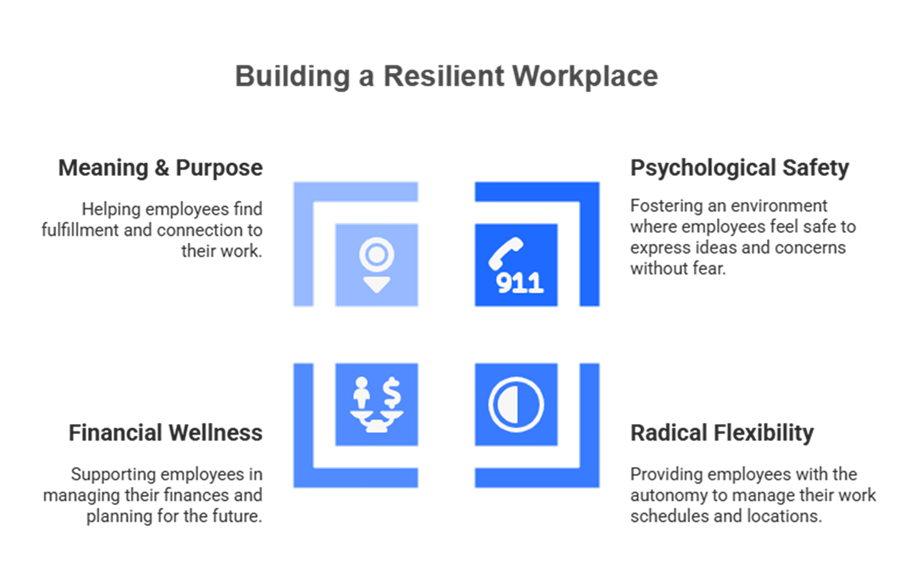
The distinction between a temporary workplace wellness program and an embedded well-being infrastructure is profound. A program is a calendar item; an infrastructure is the culture.
To truly build a high-retention culture, organizations must look inward and integrate well-being across the entire talent services lifecycle, from onboarding to career development. This requires strong leadership that champions the cause and the right strategic partners who understand the complexity of modern workforce dynamics.
Compunnel Talent Services, for example, helps organizations look beyond immediate staffing needs to cultivate organizational health. By optimizing talent acquisition and providing agile workforce solutions, we free up internal HR capacity to focus on culture-defining work, such as building and sustaining these deep well-being infrastructures.
Burnout is no longer a personal failure or a temporary phase—it is a structural signal. A signal that the way we design work, manage performance, and support people must fundamentally change. The new science of well-being makes one truth undeniable: retention is not sustained by policies alone, but by cultures that prioritize psychological safety, autonomy, financial security, and purpose.
Organizations that embed these principles into their workforce architecture will not only reduce attrition—they will unlock higher engagement, stronger loyalty, and long-term resilience. In a world defined by constant change, well-being is no longer a “nice to have.” It is the most durable competitive advantage.
Connect with Compunnel Talent Services

List of Content

Hybrid work didn’t ease into the mainstream; it crashed through it. In less than five years, the traditional office model…

Introduction — The Great Reset Has Begun Cybersecurity in 2026 is standing at a breaking point. The old rules of defense…